
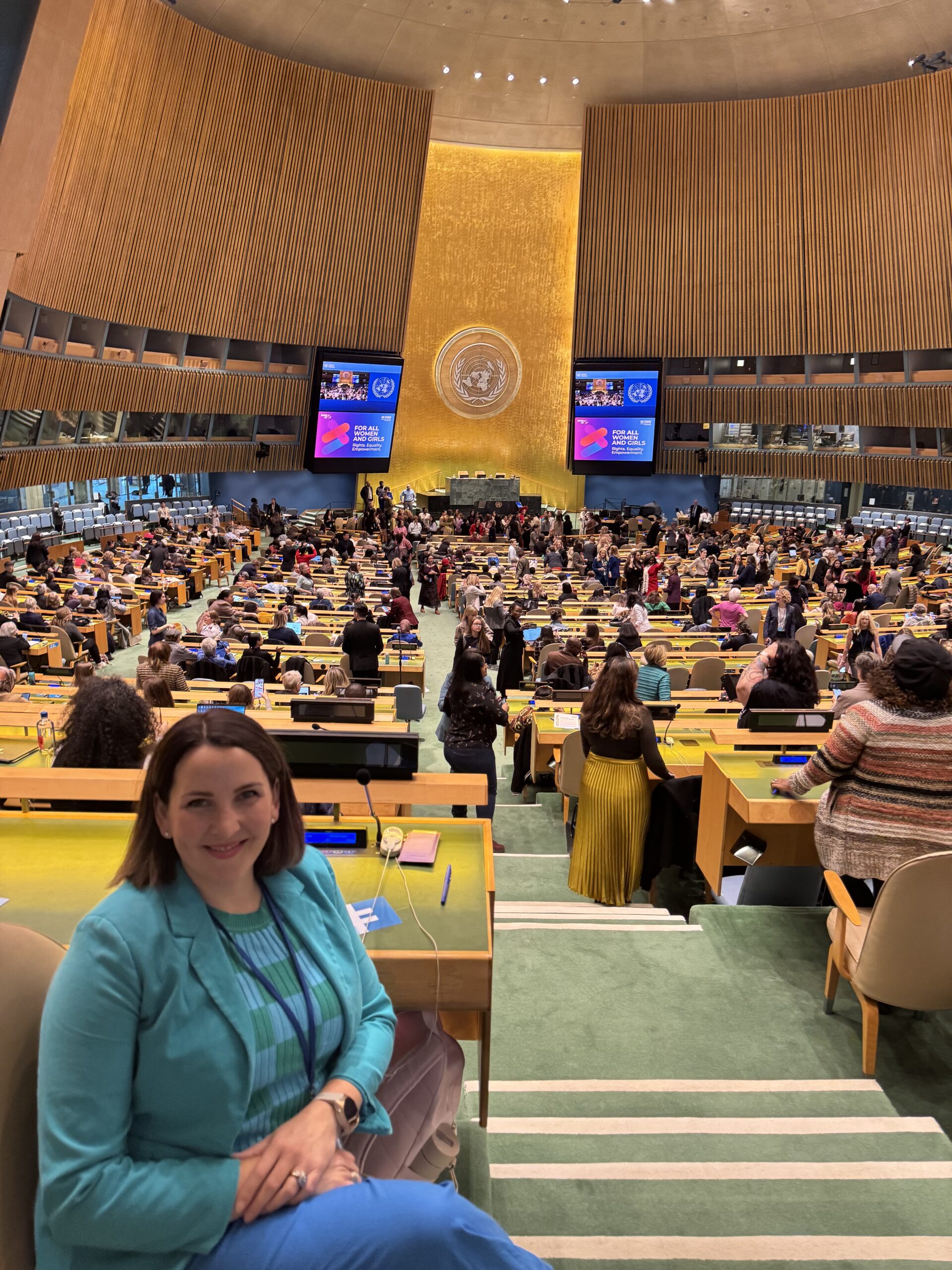
In March, I had the privilege of travelling to New York as part of the Mercy Emerging Leaders Fellowship (MELF) programme.
MELF is a year-long leadership development journey for women connected to the Sisters of Mercy or Mercy institutions, run through a branch of the Mercy International Association, called Mercy Global Action. It focuses on building leadership capacity through engaging with global justice issues—particularly the issues of environmental degradation and the displacement of people. Our cohort is a beautifully diverse group of 10 women from across the world, each of us working and living in vastly different contexts, and bringing unique perspectives to the table.
The New York immersion is one of three shared experiences in the MELF programme. We’ve previously travelled together to Cambodia, and later this year, we’ll gather once more in Dublin.
A central part of our time in New York was attending the United Nations Commission on the Status of Women (CSW). Established in 1946 by then US First Lady Eleanor Roosevelt, the CSW is dedicated to advancing gender equality and promoting the role of women in economic and social development. This year’s session was especially significant, marking 30 years since the Beijing Declaration and Platform for Action—a landmark global agreement and plan around achieving gender equality. We attended a wide range of events and meetings, immersing ourselves in critical conversations from around the globe. It was a complex experience—sometimes inspiring, sometimes sobering—but ultimately heartening to witness the collective efforts being made.
Being part of this global conversation within the United States – especially against the backdrop of ongoing political developments – was especially interesting. Some of the daily developments were openly described at the UN as “rollbacks”, highlighting the urgency of continued advocacy.
One of the most powerful and moving moments of the trip was stepping into the UN Security Council chambers, just after the day’s session had concluded. That same day, the UN Secretary-General had delivered a stark challenge to the Council, accusing it of failing in its duty. Standing in that space—so full of potential for shaping peace—was deeply emotional. It left me feeling overwhelmed, a mix of despair and hope. Until then, I hadn’t felt a particularly strong personal connection to the idea of praying for world peace. That changed in that moment. Since then, I’ve followed international conversations around the role of the UN more closely, especially questions around its relevance and how it might need to evolve to meet the urgent needs of people and planet alike.
A key component of MELF is creating a project that gives back to the Mercy world. My project focuses on how Mercy governance boards assess their contribution to what’s being called the “8th Work of Mercy”: Care for Our Common Home. While there are existing tools to help boards measure climate impact and set goals for improvement, I’m exploring how we can do this through a distinctly Mercy lens. What can our Mercy tradition teach us about responding to today’s ecological crisis? And how do we apply that wisdom in a meaningful way?
To put it plainly—no, you can’t find a quote from Catherine McAuley didn’t write about climate change. But she, and the early Sisters of Mercy, gave us a legacy of a Mercy way of responding to issues, and it’s important we deepen our understanding of how to apply a Mercy lens to present day issues. My hope is that this project will support governance groups across the Mercy world—and particularly here in Aotearoa—to deepen our collective Mercy response around care for our common home.
I am incredibly grateful to be part of the MELF programme, and I look forward to sharing more of this journey and the project with the Mercy community in Aotearoa.
Charlotte Cummings